FlemingClans.com

"Scotland's Fleming Clan: a Genealogical History" - coming in 2027!
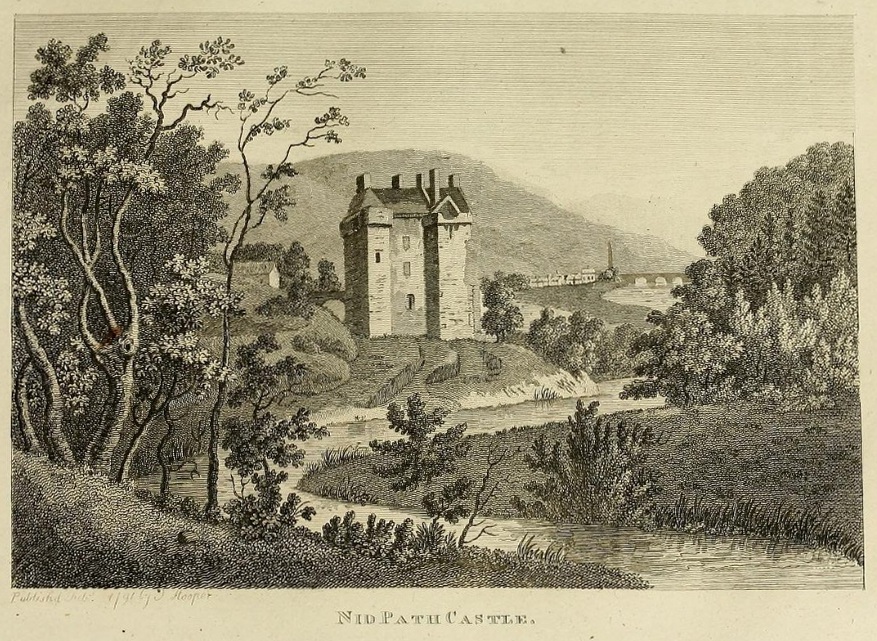 Simon Fraser, 3rd of Oliver Castle and Neidpath
(c1270 - 1306)
Basic information about this person: \click here\
Simon Fraser, “the Patriot”, was one of the most famous figures of the First War of Scottish Independence, even though he changed sides five times between 1296 and 1306. He won the Battle of Roslin, fought beside William Wallace and Robert Bruce, and was executed in London. His daughter Joan brought Oliver Castle and the Fraser lands in Tweeddale to the Flemings.
The Frasers of Oliver Castle
An Oliver Fraser is credited with building Oliver Castle in upper Tweeddale. The castle passed to his great-nephew Gilbert Fraser, Sheriff of Peebles in 1233 and 1259. Gilbert’s descendants included the Frasers of Philorth and of Lovat, while his kinsman Adam founded the Frasers of Fruid, whose heiress later carried Drumelzier to the Tweedies, the Flemings’ bitter enemies.
Gilbert’s second son, Simon Fraser of Oliver Castle, was probably the largest landholder in Tweeddale and Sheriff of Traquair and Peebles from 1264 to 1266. His son, Simon Fraser the elder, was a justiciar, sat in the council at Scone in 1284 and swore fealty to Edward I in 1291 before dying soon afterwards.
Changing sides
Simon the younger was born around 1270 at Oliver Castle, the son of Simon Fraser the elder and Maria Bisset. In 1292 Edward I granted him his father’s lands, including Kingledoors, on payment of a hundred merks, and he did homage to Edward that December. He fought for the Scots at Dunbar in April 1296 and was captured, but by October had sworn fealty to Edward and agreed to serve in his army in Flanders, so his estates were restored. In 1298 Edward paid him for 68 days’ service as a knight banneret and gave him a dappled grey horse. In 1300 he fought on the English side at the siege of Caerlaverock with a retinue of three knights and twelve squires, and that October he became keeper of the forest of Traquair, as his father had been.
Within a year he had changed sides again, perhaps frustrated by corrupt English officials who had not paid him, and in September 1301 he commanded a Scottish force at Stanhouse against Edward.
Guardian of Scotland and the Battle of Roslin
By 1302 Simon was one of the Guardians of Scotland. When Edward sent an army under John de Segrave towards Stirling and Kirkintilloch, Segrave divided it into three divisions. Simon led the Scots sixteen miles from Biggar and, with John Comyn, surprised and routed the first English division near Roslin in February 1303. The fugitives and their pursuers crashed into the second division, which suffered the same fate, and confusion spread to the third. After a desperate struggle the whole English army was driven back towards Berwick.
With Wallace and Bruce
The English struck back. In March 1304 Simon and William Wallace were defeated at Happrew, on Simon’s own lands in Tweeddale. Simon then joined almost all the other Scottish magnates in submitting to Edward, and his forfeited estates were returned on payment of three years’ rent. The terrible fate of Wallace, executed in London in 1305, may have persuaded Simon to change sides one last time. After Robert Bruce seized the crown in 1306, Simon joined him, and at the Battle of Methven that June he is said to have saved Bruce’s life several times when the king was unhorsed.
Soon after the battle, Simon was captured by David de Brechin and taken to London, where he was tried for treason. On 8 September 1306 he was drawn on a hurdle to the place of execution, hanged and beheaded, and his head was set on London Bridge near Wallace’s. A nineteenth-century memorial to him stands in Almondell and Calderwood Country Park in West Lothian.
The Fraser arms
The seal Simon attached in 1297 to his promise to serve in Flanders shows six cinquefoils, or rosettes, beneath a label of four points, with dragon-like figures on each side of the shield. The rosettes are strawberry flowers, “fraises”, a pun on the name Fraser. The arms are blazoned Azure, six fraises argent. Fleming family histories claimed that the Flemings quartered the Fraser arms immediately after Patrick Fleming’s marriage to Joan Fraser, but Patrick’s son and grandson used the plain Fleming arms. The earliest known Fleming arms quartered with Fraser appear in the Armorial de Berry of about 1445.
Family and legacy
Simon and his wife Maria had two daughters. Margaret, the elder, inherited Neidpath and married Gilbert Hay of Lochowart; they were ancestors of the Lords Hay of Yester, later Earls and Marquesses of Tweeddale. Joan, the younger, inherited the barony of Oliver Castle and married Patrick Fleming of Biggar, bringing much of the Fraser inheritance in Tweeddale to the Flemings (see Estate: Olivercastle). By 1327 Patrick was Sheriff of Tweeddale, inheriting much of the Frasers’ local standing as well as their lands.